Food as Memory and Ritual
Food is more than nourishment—it’s a vessel of memory, ritual, and identity. The flavors that fill a kitchen carry echoes of those who came before us: a grandmother’s recipe, a scent rising from the stove, a meal prepared on a sacred day. Across time and cultures, food has remained humanity’s most intimate language of remembrance. It commemorates births, binds forgotten families across oceans, and comforts the grieving. In every bite lies a story, an inheritance of survival and love. The salt on the tongue, the smoke of cooking fires, the warmth of shared bread—these sensations revive hands and voices. Whether set on a holiday table or a humble plate, every meal is both offering and continuity: to cook is to remember; to eat together is to renew. In this way, food becomes our most enduring ritual, keeping the past alive in every season of the present.
Remembering Through Food, Culture, and Shared Stories
Across continents and centuries, All Souls’ Day has remained a sacred moment of reflection — a day to honor those who have crossed before us by sharing the gifts they left behind. While customs vary across the world, the heart of this day is the same: to nourish remembrance through prayer, food, and storytelling.
The act of cooking together, lighting candles, and serving ancestral dishes is more than a ceremony — it is an offering of love that connects the living to the departed. Every family’s table becomes an altar; every meal shared is its own quiet prayer.
A Table of Memory and Gratitude
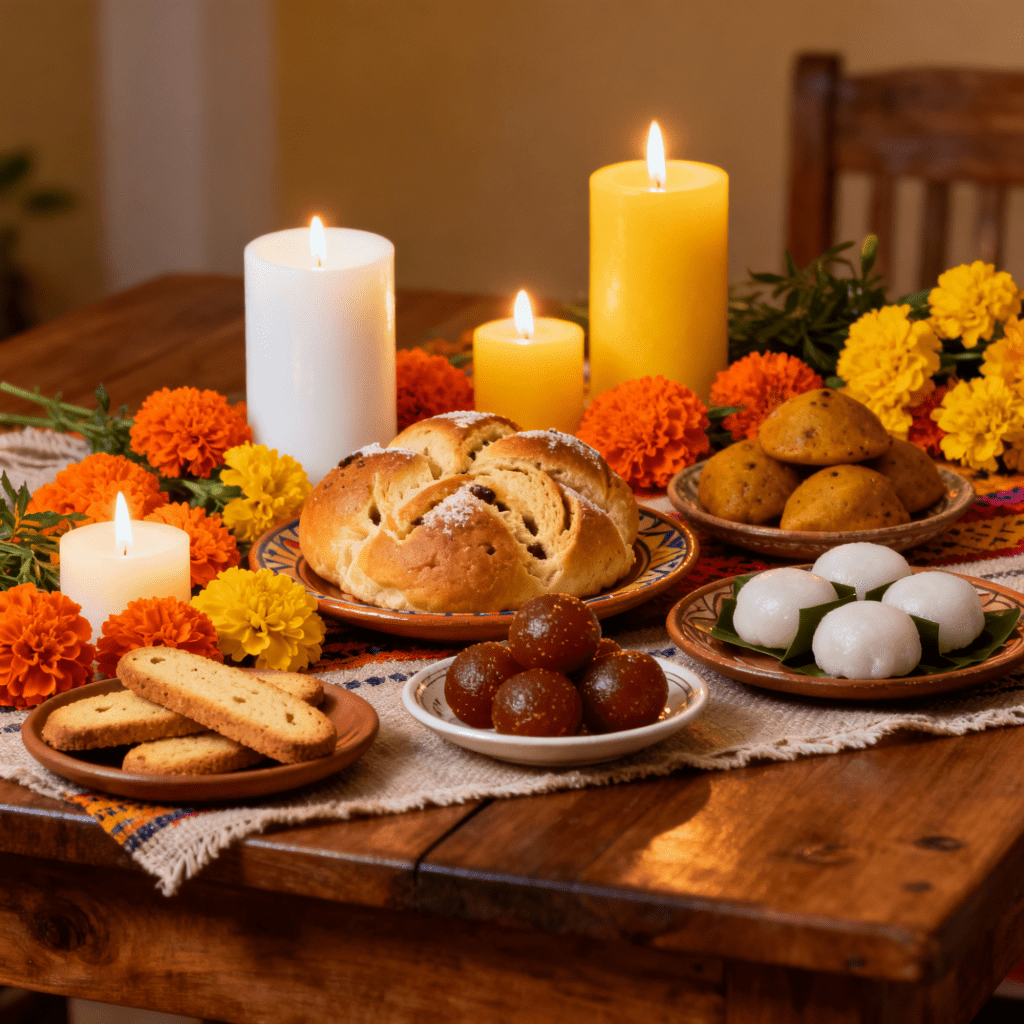
From Italy to Mexico, Ireland to Senegal, our ancestors understood that remembering those who came before needed something tangible — flame, scent, and taste. Food carries memory in its simplest, most comforting form. On All Souls’ Day, a cup of milk, a sweet bread, or a bowl of stew becomes both sustenance and symbol: an invitation to the spirits of the past and a celebration of the resilience of the living.
In Mexico, families prepare Pan de Muerto, or “bread of the dead,” its circular form and sugar-dusted bones symbolizing the eternal cycle of life.
In Ireland, Soul Cakes — small, spiced breads — are baked and shared while prayers are offered for departed souls, an act rooted in the medieval tradition of “souling.”
Across the Pacific islands, kumara (sweet potatoes) drizzled with coconut cream recall ancient ways of honoring family lineage and the relationship between land, sea, and spirit.
In Senegal, the vibrant rice and fish dish Thieboudienne embodies gratitude for community and shared heritage.
In China, during the Qingming Festival, families kneel before the graves of their ancestors with offerings of Qingtuan, green rice dumplings that symbolize renewal and remembrance.
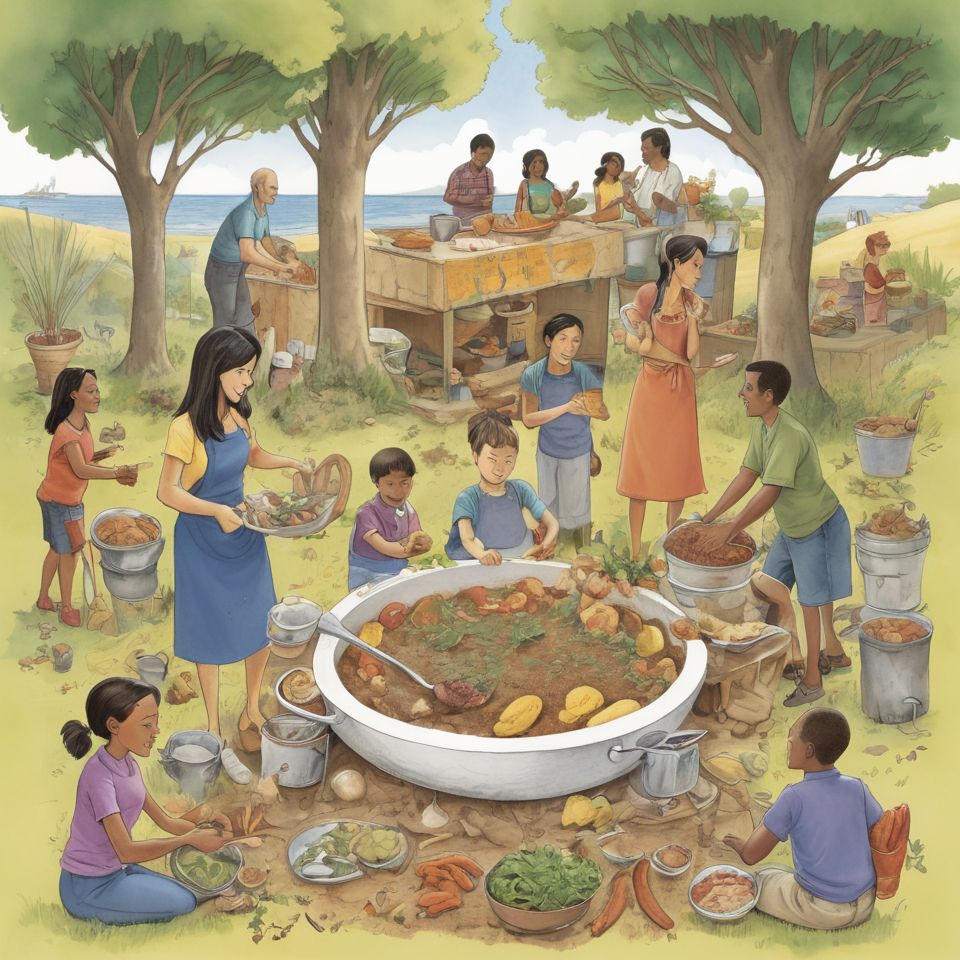
And among Indigenous peoples of Turtle Island, the Three Sisters Stew — corn, beans, and squash — carries ancestral wisdom about balance, nourishment, and stewardship of the land.
Each dish is more than food; it’s a story — a preservation of identity and a continuation of life’s sacred rhythm.
Why We Gather and Share
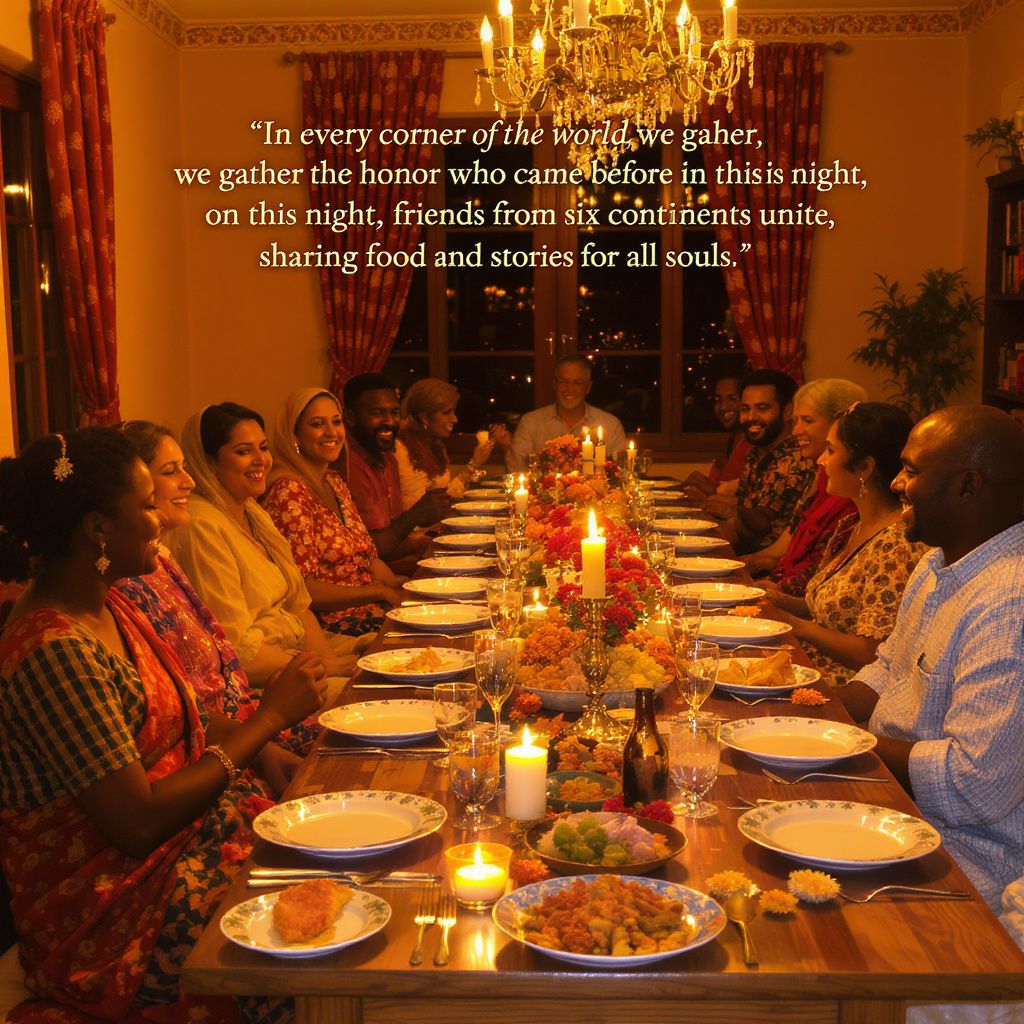
Gathering to eat, tell stories, and remember is not a mere ritual — it’s an act of connection that keeps our communities alive. Each pot stirred, each bite shared, breathes life into the customs that shaped us. These meals are lessons from time itself: teaching patience, gratitude, and an understanding that we are part of something enduring.
Food is the great translator of culture. It transcends language, faith, and geography. It reminds us that even amid grief, the human response is to create warmth — to feed ourselves and others in remembrance and hope.
Through storytelling, the recipes of generations past continue to find new meaning — their flavors adjusted, but their essence unchanged.
Passing the Flame Forward
We inherit these foods and traditions not just as keepsakes of the past, but as promises for the future. To prepare them is to engage in a sacred duty, ensuring that the wisdom, love, and creativity of our ancestors are not lost. Cooking becomes storytelling; storytelling becomes continuity.
To forget these customs would be to let go of our identity. But sharing them—whether through a family dinner, a community feast, or even a YouTube video seen across borders—ensures that memory survives. It is how the voices of the past continue to speak.
A Shared Feast of Respect
Survival, in every culture, has depended on community — on compassion that is expressed through shared meals and respect for differences. Each All Souls’ Day dish tells the same truth: our humanity strengthens when we give, when we remember, and when we share what nourishes us with reverence.
To gather in remembrance is to affirm that love doesn’t end with death. It transforms — into story, into flavor, into life passed forward.
May every meal shared in memory remind us that our connection to the past is not meant to bind us, but to sustain us. Because each culture’s survival — and each soul’s journey — is strengthened by the simple act of sharing, with gratitude and respect.
 It's Nicky Lynn